Will RAM Ever Be Cheap Again? Inside the Memory Supercycle
Will RAM Ever Be Cheap Again? Inside the Memory Supercycle
TL;DR: RAM prices tripled in 2025. A 32GB DDR5 kit that cost $120 in May now costs $410 in December — a 242% increase. DDR4 isn’t cheaper either: production cuts brought it to price parity with DDR5 for the first time ever. The cause is structural: AI data centers now consume 70% of all memory production, and HBM chips for AI GPUs require 3-4x more wafer capacity than standard DDR5. Three companies (Samsung, SK Hynix, Micron) control 95% of the global market, and all three are prioritizing AI over consumers. Micron killed its Crucial consumer brand entirely. TrendForce projects Q1 2026 contract prices will surge another 90-100% quarter-over-quarter — the largest quarterly increase on record. Analysts call this a “supercycle”: a structural shift, not a temporary shortage. SK Hynix says it won’t ease until 2028. If you need RAM today, look for combo deals and pre-built systems. If you can wait, hold until Q3 2026 at the earliest.
A few months ago, you could outfit a mid-range gaming PC with 32GB of DDR5 for about $80. Today, that same kit costs over $400.
This isn’t a temporary price spike. It isn’t a seasonal fluctuation. And it isn’t because of a natural disaster disrupting a factory somewhere in Asia. What’s happening to RAM prices in 2025-2026 is something the industry hasn’t seen in decades — and understanding why requires following the money from your shopping cart all the way to Nvidia’s AI data centers.
After investigating TrendForce reports, manufacturer earnings calls, analyst forecasts, and market data from over 60 sources, a pattern emerges: the RAM you want for your PC and the RAM that trains ChatGPT come from the same factories — and AI is winning the bidding war.
The Numbers: What Actually Happened
Let’s start with what you’re actually paying. Here’s how consumer RAM prices evolved from mid-2024 to early 2026:
DDR5 Kit Prices
| Kit | May 2025 | Dec 2025 | Change |
|---|---|---|---|
| 16GB DDR5 | ~$50 | ~$200 | +300% |
| 32GB DDR5-6000 | ~$120 | ~$410 | +242% |
| 64GB DDR5-6000 | ~$210 | ~$750 | +257% |
Sources: Tech Searchers, PC Build Advisor
DDR4 Kit Prices
If you thought switching to DDR4 would save you money, think again:
| Kit | May 2025 | Dec 2025 | Change |
|---|---|---|---|
| 16GB DDR4-3200 | ~$50 | ~$120 | +140% |
| 32GB DDR4-3600 | ~$90 | ~$240 | +167% |
| 64GB DDR4-3600 | ~$180 | ~$470 | +161% |
Source: Accio DDR4 Price Trend, The Memory Guy
By May 2025, DDR4 and DDR5 reached price parity — something that has never happened before between an outgoing and current generation of memory. Normally, the old standard gets cheaper as the new one matures. This time, it got more expensive.
The Broader Market
The numbers at the wholesale level are even more dramatic:
- DRAM contract prices surged 171.8% year-over-year as of Q3 2025, according to Tom’s Hardware — a higher YoY price increase than gold
- 16Gb DDR5 chips went from $6.84 to $27.20 in Q4 2025 alone
- Q1 2026 projections: TrendForce expects conventional DRAM contract prices to rise 90-95% quarter-over-quarter, with PC DRAM exceeding +100% QoQ — the largest quarterly surge on record
- RAM prices across global markets surged 163-619% depending on region and product
Memory now represents over 20% of a notebook’s bill of materials cost in 2026, up from approximately 5% in Q3 2025. For PC builders, 32GB RAM has gone from ~5% of a mid-range build budget to 20-25%.
Why: AI Is Eating Your RAM
The short answer: your RAM and AI’s RAM come from the same factories, and AI pays more.
The longer answer involves understanding a technology called HBM (High Bandwidth Memory) — the specialized DRAM that powers every Nvidia GPU training large language models. And HBM has an appetite problem.
The HBM Capacity Problem
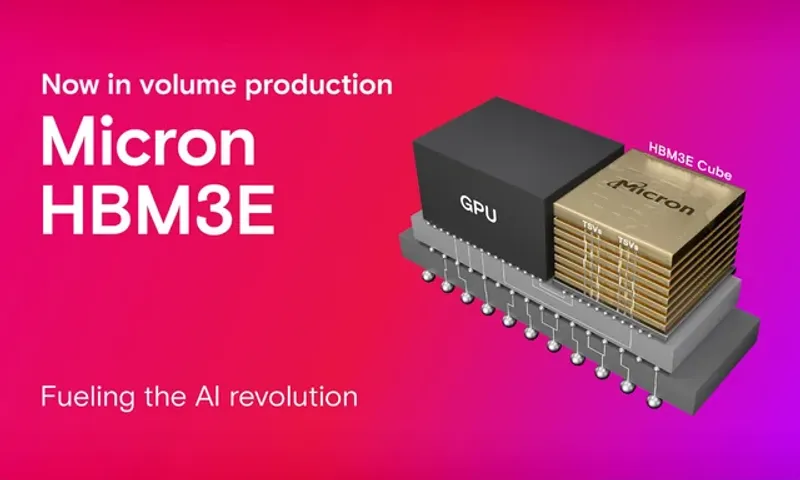
HBM isn’t just regular RAM in a fancy package. It’s manufactured by stacking multiple DRAM dies vertically using Through-Silicon Vias (TSV), then connecting them with advanced packaging. This process is inherently less efficient:
- HBM3E has a bit density of 0.16 Gb/mm², compared to DDR4’s 0.296 Gb/mm² — 85% denser
- Stacking 9-13 layers introduces significant yield losses
- Every GB of HBM requires 3-4x the wafer capacity of standard DDR5
This means a single Nvidia B200 GPU with 192GB of HBM3E consumes the wafer equivalent of roughly 576-768GB of DDR5 that could have gone into consumer PCs.
And the margins tell the whole story. HBM accounts for only ~8% of total DRAM output by volume but generates 30% of revenue. Why would any rational manufacturer prioritize $6-8/GB DDR5 when they can sell HBM at $50-70/GB?
Data Centers Are Devouring the Supply
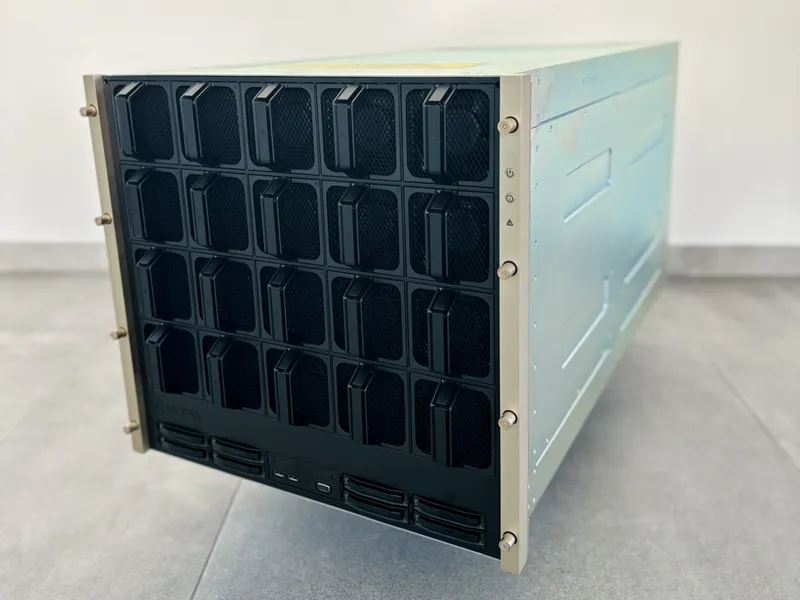
The scale of AI infrastructure demand is staggering:
- Data centers will consume 70% of all high-end memory production in 2026, leaving only 30% for PCs, smartphones, and everything else, according to Tom’s Hardware
- AI-equivalent consumption accounts for nearly 20% of total DRAM wafer capacity in 2026, up from less than 5% in 2023
- OpenAI’s Stargate project alone signed procurement agreements for up to 900,000 DRAM wafers per month — approximately 40% of global DRAM output
- Cloud giants (Amazon, Microsoft, Google, Meta) are securing long-term contracts that lock supply away from consumer markets
- SK Hynix’s entire 2026 HBM production is already sold out to Nvidia
The Supply Chain Funnel
Here’s how the DRAM supply chain works — and where your RAM gets squeezed:
graph TD
  W["DRAM Wafer Capacity — 2.25M wafers/month"] --> HBM["HBM for AI GPUs — 20% of capacity — 3-4x per GB"]
  W --> SERVER["Server DDR5 — 35% of capacity"]
  W --> MOBILE["Mobile LPDDR5X — 15% of capacity"]
  W --> CONSUMER["Consumer DDR5/DDR4 — 30% of capacity"]
  HBM --> NVIDIA["Nvidia H100/B200 — $50-70/GB margin"]
  SERVER --> CLOUD["AWS / Azure / GCP — Long-term contracts"]
  CONSUMER --> YOU["Your PC Build — $6-8/GB"]
  style W fill:#1e293b,stroke:#334155,color:#e2e8f0
  style HBM fill:#7f1d1d,stroke:#991b1b,color:#fecaca
  style SERVER fill:#78350f,stroke:#92400e,color:#fef3c7
  style MOBILE fill:#1e293b,stroke:#334155,color:#e2e8f0
  style CONSUMER fill:#14532d,stroke:#166534,color:#bbf7d0
  style NVIDIA fill:#7f1d1d,stroke:#991b1b,color:#fecaca
  style CLOUD fill:#78350f,stroke:#92400e,color:#fef3c7
  style YOU fill:#14532d,stroke:#166534,color:#bbf7d0
The Crucial Exit
Perhaps nothing illustrates the shift better than Micron’s decision to kill its Crucial consumer brand entirely in December 2025. Final shipments: February 2026. The rationale is simple: why sell $8/GB consumer sticks when you can sell $50/GB HBM to Nvidia?
This removes approximately 20% of global consumer DRAM manufacturing capacity from the market. One of three companies that makes all the world’s RAM just decided your PC isn’t worth the silicon.
The Oligopoly of Three
To understand why prices can rise this aggressively without market correction, you need to understand who makes DRAM. The answer: almost nobody.
Market Concentration
| Manufacturer | DRAM Market Share (Q2 2024) | HBM Market Share (Q2 2025) |
|---|---|---|
| Samsung | 42.9% | 17% |
| SK Hynix | 34.5% | 62% |
| Micron | 19.6% | 21% |
| Combined | ~97% | ~100% |
Sources: Statista, Astute Group
Three companies control 95% of global DRAM production capacity. This is one of the most concentrated industrial markets on the planet. For context, OPEC controls roughly 40% of global oil production. The DRAM Big Three make OPEC look diversified.
This concentration didn’t happen by accident. In 2012, SK Telecom acquired Hynix. In 2013, Japan’s last DRAM manufacturer (Elpida) went bankrupt and was absorbed by Micron. What had been a 10-company market became a three-player cartel.
The Price-Fixing History
This isn’t the first time DRAM prices have risen suspiciously. The industry has a documented history:
- 1998-2002: Five manufacturers (including Samsung, Hynix, and Micron) pleaded guilty to criminal price-fixing in an international conspiracy
- 2018: Hagens Berman filed a class-action lawsuit against all three alleging price manipulation that drove prices up 130%
- 2021: Yet another lawsuit was filed over alleged DRAM price collusion
- The courts ultimately dismissed the latest cases, ruling that parallel pricing behavior in a concentrated market isn’t necessarily collusion
Whether or not there’s active coordination today, the market structure itself creates aligned incentives. All three manufacturers are simultaneously shifting capacity toward AI, maintaining “greater discipline in supply management”, and enjoying operating margins of 44-59% — with SK Hynix hitting 59%.
Why Can’t Someone Just Build More Fabs?
Because a modern DRAM fabrication plant costs $10-20 billion to build and takes 2-3 years from groundbreaking to production. Micron’s New York megafab (the largest semiconductor facility in the U.S.) broke ground in January 2026 but won’t reach full production until the 2040s.
Even the existing manufacturers are cautious about expansion. All three have announced only modest CapEx increases for 2026, preferring high margins over rapid capacity growth:
| Manufacturer | 2025 CapEx | 2026 CapEx | Strategy |
|---|---|---|---|
| Samsung | ~$24.5B | ~$29.7B (+21%) | Balanced demand, avoid oversupply |
| SK Hynix | ~$20.8B | ~$26B (+25%) | 90% allocated to DRAM/HBM |
| Micron | $18B | $20B (+11%) | Focus on New York megafab |
Source: Global Semi Research
DRAM supply growth is projected at only 16% YoY for 2026 — significantly below demand growth of ~35%. The gap is intentional. Higher prices mean higher margins, and no one is in a rush to fix that.
Is This the New Normal?
This is the key question. Is this a temporary spike — like the 2020-2021 GPU shortage that eventually resolved — or is this a permanent repricing of memory?
The Case for “Temporary” (Cyclical Downturn Eventually)
DRAM has historically been one of the most cyclical markets in technology. The pattern repeats roughly every 3-4 years:
- Shortage → prices spike → manufacturers invest in new capacity
- New capacity comes online → oversupply → prices crash
- Manufacturers cut production → inventory clears → shortage returns
The 2022-2023 period saw a severe market downturn with price crashes and inventory corrections. Many expected the current cycle to follow the same pattern, peaking and then correcting.
A potential oversupply scenario in 2028-2029 remains a realistic possibility if AI demand moderates as new capacity expands.
The Case for “New Normal” (Structural Supercycle)
But several factors make this cycle different from anything before:
1. AI demand is structural, not cyclical. Unlike the crypto mining boom (which collapsed) or the pandemic work-from-home surge (which normalized), enterprise AI infrastructure is being built for the long term. SK Hynix calls this a “supercycle” — a prolonged period of elevated prices driven by a structural demand shift, not a temporary shortage.
2. HBM demand is growing faster than capacity. Demand for DRAM is growing ~35% in 2026 versus ~23% supply growth. And each new generation of AI GPUs demands more memory: the Nvidia B200 has 192GB of HBM3E, up from the H100’s 80GB.
3. Manufacturers have no incentive to flood the market. Unlike previous cycles where competitors raced to expand, all three are exercising unprecedented pricing discipline. They learned from the 2022 crash that oversupply destroys margins.
4. DDR4 is dying. SK Hynix reduced DDR4 production to 20% of previous levels. Samsung and Micron halted most DDR4 output entirely. There is no “cheap alternative” to fall back on anymore.
The Analyst Consensus
| Source | Forecast | Timeline |
|---|---|---|
| TrendForce | Prices peak Q1 2026, elevated through year | 2026 |
| SK Hynix | Shortage won’t ease until 2028 | 2028 |
| Counterpoint Research | Server DRAM prices double by late 2026 | 2026-2027 |
| WCCFTech (industry sources) | Shortages last until Q4 2027 | 2027 |
| Blocks and Files | Memory supercycle runs through 2028 | 2028 |
| Team Group GM | ”The crisis has only just started” | 2026+ |
The consensus is clear: this is not going back to 2024 prices anytime soon. The best-case scenario is partial normalization by late 2027. The base case is elevated prices through 2028 when new fabrication capacity finally reaches volume production.
The Wild Card: China
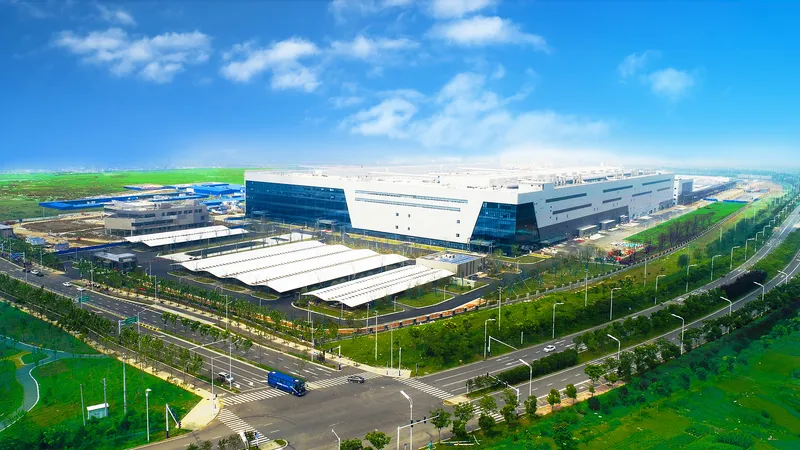
There’s one potential disruptor that could change the equation: ChangXin Memory Technologies (CXMT), China’s state-backed DRAM manufacturer.
CXMT’s Rapid Rise
CXMT has been scaling aggressively:
- Now the world’s fourth-largest DRAM manufacturer by production volume
- Monthly wafer production doubled from 100,000 (early 2024) to 200,000 (Q1 2025), forecasted to reach 300,000 by 2026
- Recorded its first-ever annual profit in 2025 (CNY 2-3.5 billion on ~$8B revenue)
- Planning a massive $4.2 billion IPO in Shanghai
The Price Disruptor
CXMT is undercutting the Big Three on price:
- Chinese DRAM makers sell DDR4 components at a 50% discount compared to Korean manufacturers
- CXMT’s 32GB DDR4 modules retail for $138-$140 vs $300-$400 for international competitors
- Analysts predict CXMT could grab 15% of the global market in coming years
The Limitations
But CXMT isn’t a silver bullet for consumers:
- Technology gap: CXMT is still primarily producing DDR4. Its DDR5 mass production was delayed to late 2025 and remains limited
- US sanctions: Export controls limit CXMT’s access to advanced EUV lithography equipment, capping its technological advancement
- HBM is out of reach: CXMT cannot produce HBM, which requires the most advanced packaging technology
- CXMT is also shifting: Like the Big Three, CXMT is transitioning from DDR4 to DDR5, which actually contributed to the DDR4 shortage
CXMT could evolve the DRAM market from a Big Three structure into a four-player contest within 1-2 years. That would help, but it won’t solve the fundamental wafer allocation problem driving current prices.
What to Do If You Need RAM Today
The practical question: what should consumers actually do?
If You Need a PC Now
| Strategy | Details |
|---|---|
| Look for combo deals | Major retailers like Newegg offer bundle deals on motherboards + memory kits that subsidize RAM costs |
| Consider pre-built systems | Pre-builts from Dell, HP, Lenovo use previously purchased inventory at better prices than current retail |
| Go 16GB if budget is tight | At ~$200, it’s painful but functional for most tasks |
| Explore the used market | Pre-owned DDR5 kits exist, though prices are also elevated |
| Carry over DDR4 | If upgrading, reuse DDR4 from a previous build with a compatible platform |
If You Can Wait
- Best-case timing: Q3 2026, when new production capacity begins arriving
- Realistic timing: Late 2027 for meaningful normalization
- Focus on non-RAM upgrades: CPUs, power supplies, cooling, cases, monitors, and peripherals maintain stable pricing
The Uncomfortable Truth
As How-To Geek bluntly put it: “If it has RAM chips, price will increase the longer you wait.” At least through mid-2026, waiting isn’t guaranteed to save you money. The shortage isn’t easing — it’s deepening.
Conclusion: Will RAM Ever Be Cheap Again?
Yes — but not soon, and probably not as cheap as before.
The memory market is in the middle of a structural transformation. For two decades, DRAM prices followed a predictable pattern: fall as manufacturing improves, spike briefly during shortages, then fall again. That pattern assumed consumer devices were the primary demand driver. They’re not anymore.
AI has fundamentally rebalanced the equation. When a single AI training cluster consumes more memory than a million PCs, and pays 8x more per gigabyte, the economic incentive to serve consumers evaporates. Three companies control nearly all production, and all three have rationally concluded that AI infrastructure is where the money is.
Here’s the realistic timeline:
- Q1-Q2 2026: Prices peak. The worst quarter-over-quarter increases on record
- Q3-Q4 2026: Prices stabilize at elevated levels as new capacity trickles in
- 2027: Gradual easing begins. Don’t expect 2024 prices — expect 2x-3x those levels
- 2028: New fabs reach volume production. Meaningful price relief possible, especially if AI demand moderates or a potential oversupply cycle kicks in
The $60 32GB kit of 2024 may never return. But $150-200 by 2028? That’s within the range of possibility.
Until then, the AI boom has a tax — and consumers are paying it one DIMM at a time.